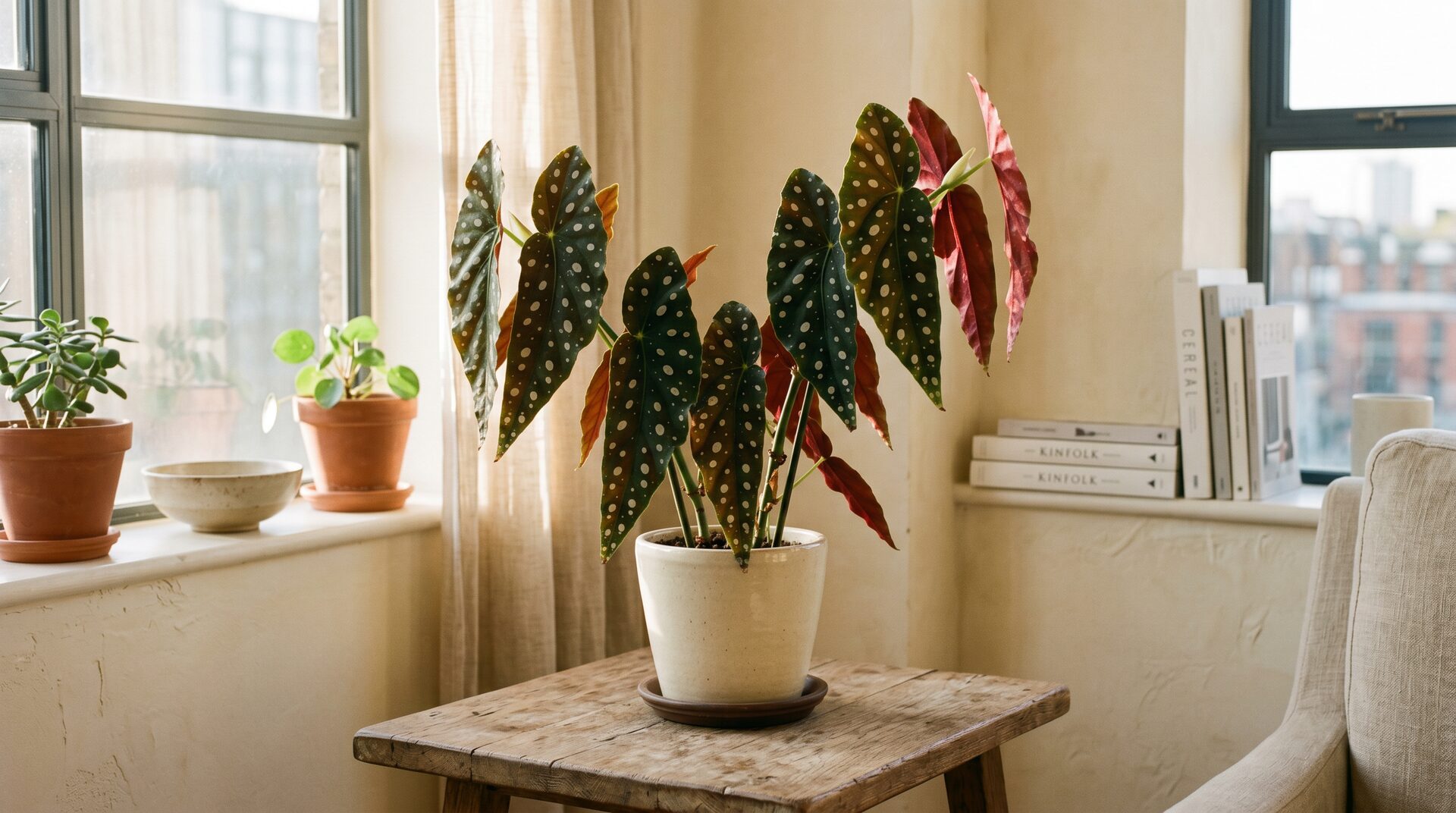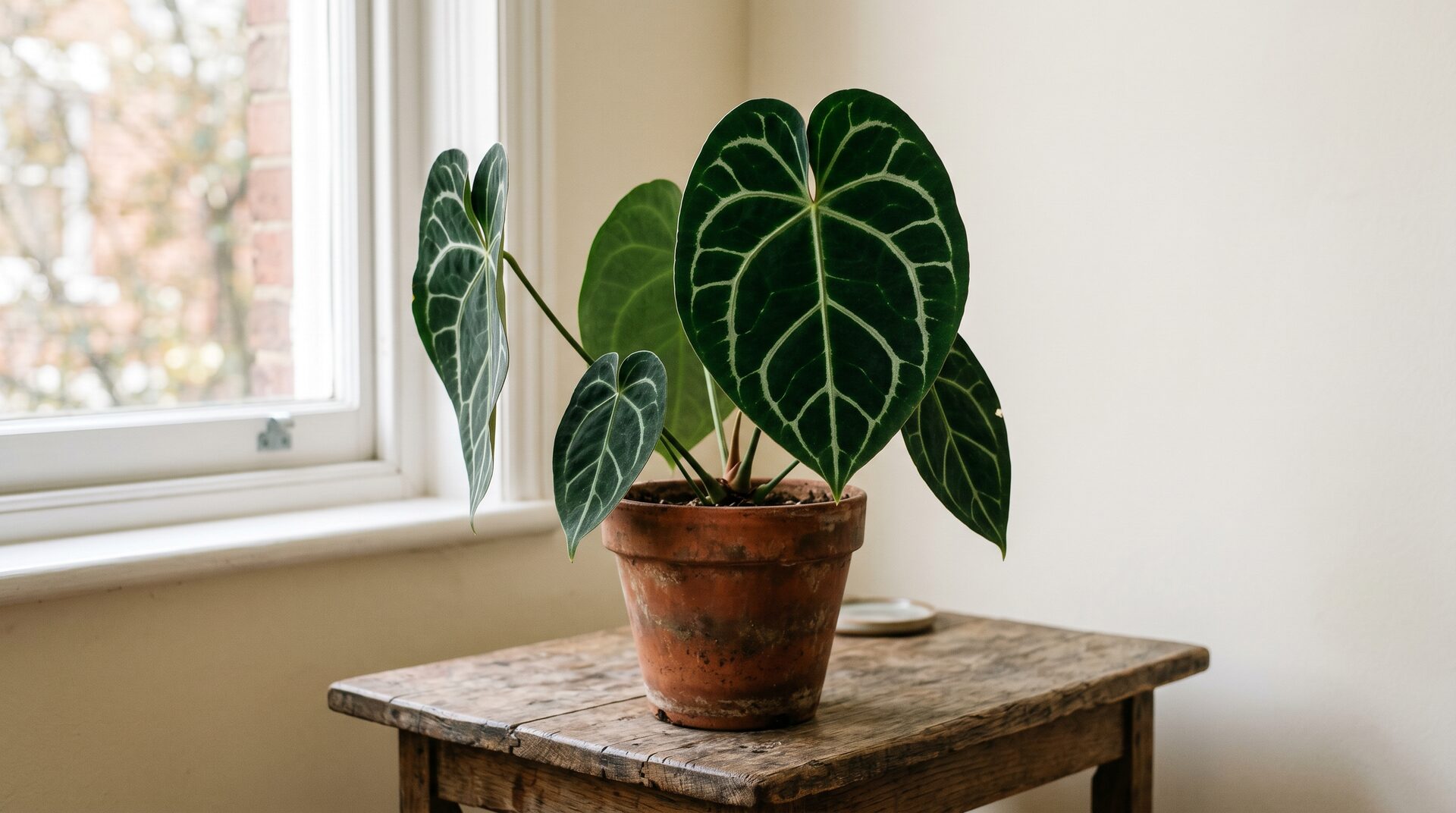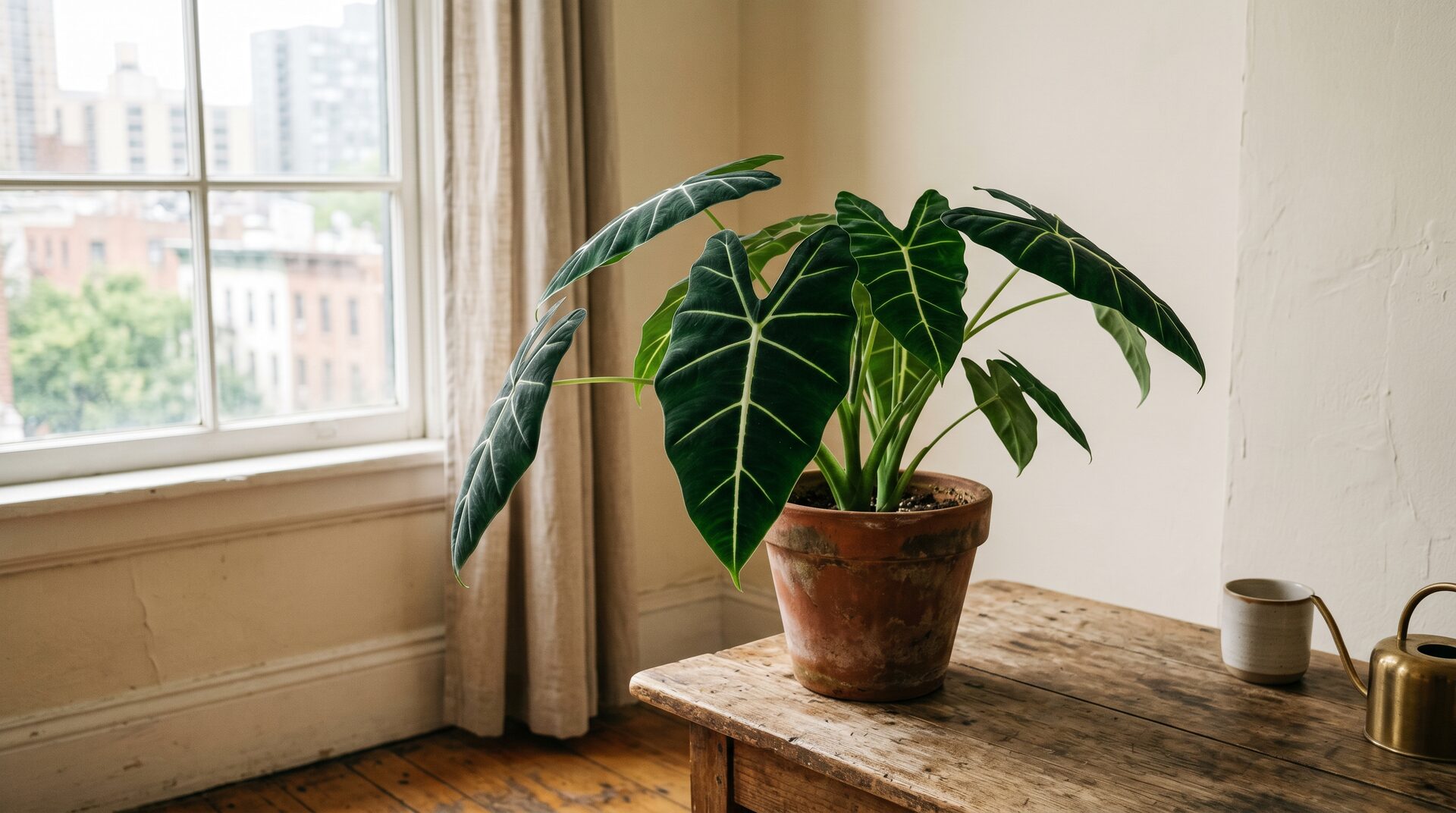
A field guide to Alocasia micholitziana 'Frydek' — light, water, humidity, substrate, and how to read its many moods.
About the Cultivar
Frydek is quiet. Deep matte green leaves, bright silver veins. Grows slow and asks for patience. One wrong move with the water, a shift in humidity, and a leaf drops.
But if you figure out what it wants, Frydek rewards you with some of the most beautiful foliage you'll grow indoors.
This is what Alocasia micholitziana 'Frydek' needs to thrive.
Native Range and Form
Alocasia micholitziana 'Frydek' is a cultivar of a Philippine native, the species occurring on Luzon (POWO, Royal Botanic Gardens Kew). The leaves are where this plant earns its name: deep matte green (almost black), with bright white veins arranged in the classic arrowhead Alocasia shape. Mature leaves get to about 18 inches (RHS / Gardenia cultivation reference), though most indoor specimens stay in the 8-12 inch range.
Plant collectors love it. Plant keepers have opinions. Both are right. This is a plant that needs the right conditions, and it will tell you immediately when something's off.
Grow it right and it's one of the most striking plants you'll own.
Light: Bright, but Filtered
Frydek wants bright, indirect light. An east-facing window is ideal. South or west windows work too, but keep it a few feet back from the glass or filter the light through a sheer curtain.
Direct afternoon sun scorches those leaves into crisp brown patches that don't recover. Not enough light, and the leaves stretch, lose their shine, and growth slows to nothing.
What to watch for: Pale, small new leaves mean increase your light. Crispy edges on a sunny side mean pull it back.
Water: When the Top Inch Dries
Water when the top inch of substrate is dry to the touch. Alocasias grow from a corm (a swollen underground stem) that rots in soggy soil. But they also wilt hard if you let them dry out completely.
When you water, water thoroughly so it runs from the drainage holes. Then let it drain completely. Never leave Frydek sitting in a saucer of water. The corm will rot in 48 hours.
Use room-temperature water. Filtered or rainwater is best. Alocasias are sensitive to chlorine and to dissolved-salt buildup in the substrate, both of which show up as crispy brown tips on the leaves. Fluoride sensitivity is well-documented for Marantaceae and Dracaena but not specifically for Alocasia — the safer working assumption is that the primary tap-water issue is salt accumulation (MSU Extension on fluoride toxicity in foliage plants).
Humidity: 60% or Higher
This is where most Frydek growers struggle. The plants evolved in tropical understory. Your living room is dry, drafty, and swinging from cold mornings to hot afternoons.
Aim for 60% or higher (RHS / Gardenia cultivation reference). A humidifier in the same room works better than misting, which breeds fungal spots on the velvety surface. Group it with other tropicals to build humidity around the canopy.
Pebble trays do almost nothing. Get a hygrometer and actually measure what you've got.
Substrate: Chunky, Airy, Drains Fast
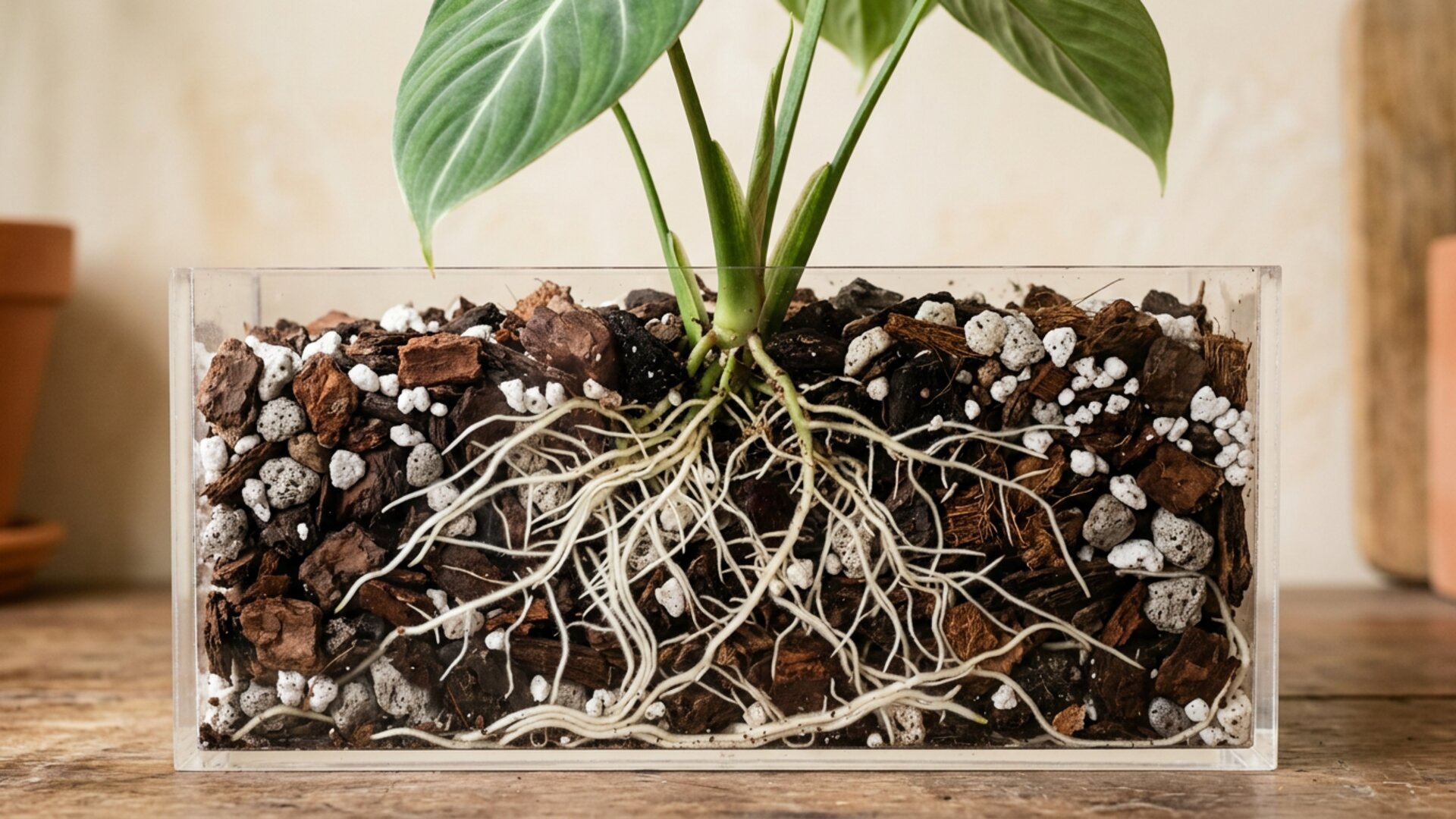
Skip bagged houseplant soil. Frydek needs a chunky aroid mix that holds moisture briefly, then drains fast. Here's what works:
- 40% orchid bark (medium grade)
- 20% perlite or pumice
- 20% coco coir or peat
- 10% horticultural charcoal
- 10% worm castings (gentle, slow nutrition)
The mix should rattle when dry and never compact. Repot only when the corm visibly fills the drainage holes. Underpotted is better than overpotted here.
Temperature & Drafts
Keep Frydek between 65-80°F (18-27°C). Below 60°F and it gets moody. Below 50°F and you risk losing leaves. Cold drafts from winter windows kill a lot of Alocasias.
Skip hot, dry air from heating vents, fireplaces, or open ovens. This plant wants stillness.
Reading Frydek's Moods
- Yellowing leaf, soft stem — overwatering. Pull back and check the corm.
- Crispy brown leaf edges — humidity is too low, or chlorine and dissolved salts from tap water are building up in the substrate.
- Drooping but firm leaves — underwatered. Water thoroughly and let it drain.
- One leaf yellowing while a new one unfurls — this is normal. Alocasias often shed an old leaf to fund a new one.
- All leaves dropped, just a corm left — dormancy or shock. Keep the substrate barely damp, place in bright indirect light, and wait. Frydek usually comes back within weeks.
- Powdery white residue on leaves — powdery mildew, not spider mites. Pull affected leaves, increase airflow, and treat with a 1:9 milk-to-water spray or potassium bicarbonate fungicide (UC IPM Pest Notes — Powdery Mildew on Ornamentals).
- Fine stippling or webbing on leaf undersides — spider mites. Increase humidity, rinse foliage, and treat with insecticidal soap (UC IPM Pest Notes — Spider Mites).
Propagation: From the Corm
Healthy Frydeks produce small offshoots called corms or bulblets from the parent's root system. Once they're the size of a marble, separate them carefully and root in damp sphagnum moss inside a humid container. A clear deli cup with a lid works well.
Keep them at 75-80°F (24-27°C) in bright indirect light. In our experience, the first leaf shows up in 2-6 weeks. Then you've got a new Frydek.
A note for pet households: Alocasia is toxic to dogs, cats, and humans if ingested — leaves and stems contain insoluble calcium oxalate raphides that cause oral irritation, drooling, and difficulty swallowing if chewed (ASPCA). Keep out of reach of pets and small children.
The Takeaway
Frydek is straightforward once you figure it out. Water when the substrate dries, not on a calendar. Pick a spot for light and leave it. Repot only when the corm outgrows the pot.
The patience this plant demands teaches you how to read the rest of your collection.
Michigan State University Extension. (n.d.). Fluoride toxicity in plants irrigated with city water. https://www.canr.msu.edu/news/fluoride_toxicity_in_plants_irrigated_with_city_water
Plants of the World Online. (n.d.). Alocasia micholitziana. Royal Botanic Gardens, Kew. https://powo.science.kew.org/taxon/urn:lsid:ipni.org:names:84208-1/general-information
UC Statewide IPM Program. (n.d.). Pest notes: Powdery mildew on ornamentals. University of California Agriculture and Natural Resources. https://ipm.ucanr.edu/home-and-landscape/powdery-mildew-on-ornamentals/pest-notes/
UC Statewide IPM Program. (n.d.). Pest notes: Spider mites. University of California Agriculture and Natural Resources. https://ipm.ucanr.edu/PMG/PESTNOTES/pn7405.html