The Planters' Guild · A Pillar of the Guild
The Flower Library
Learning to read flowers, one form at a time. A field guide to the twelve canonical inflorescence types that recur across the plant world, and the strategies they reveal.
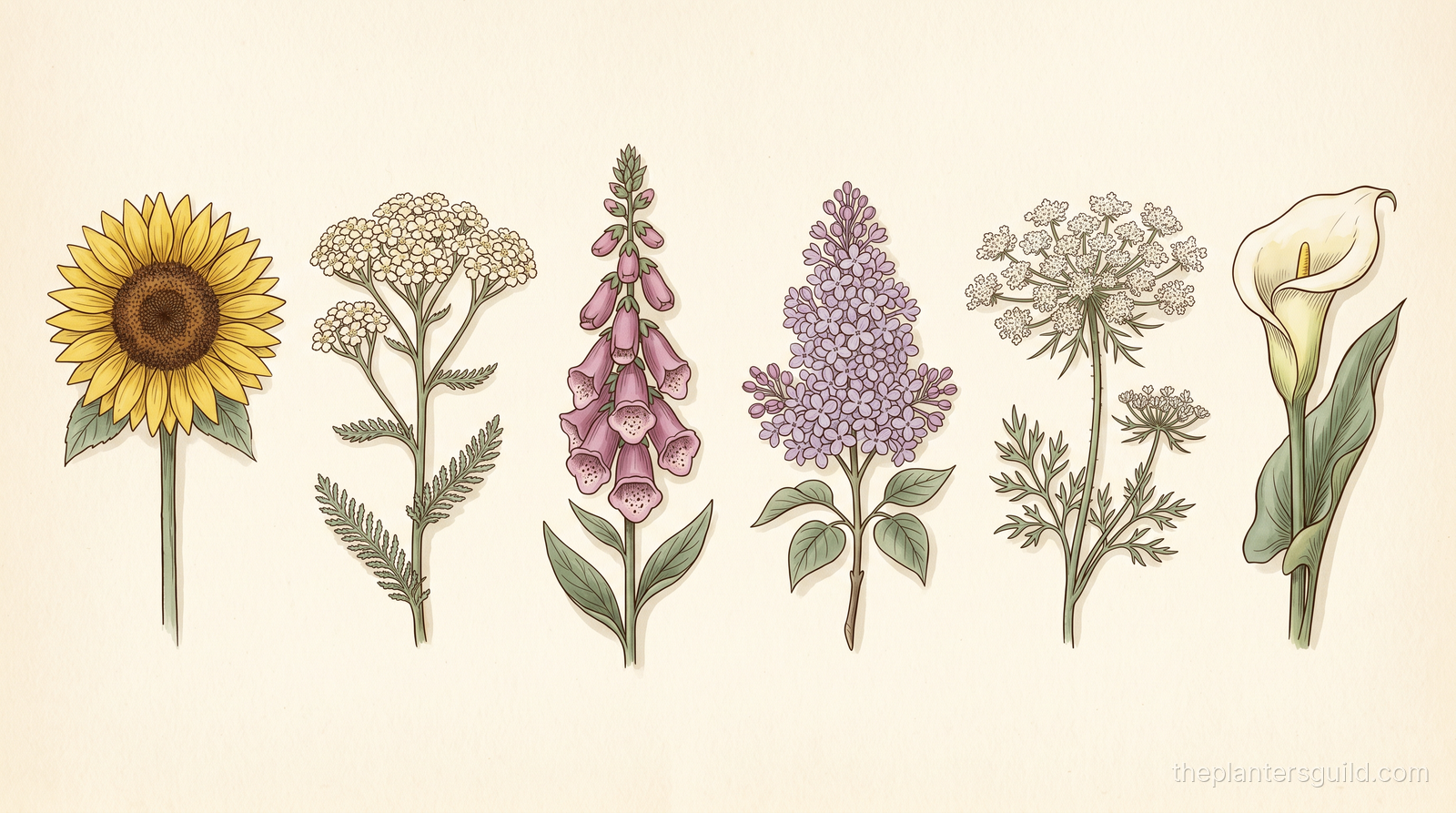
Most gardening writing starts with the plant. The genus, the species, the cultivar. The Leaf Library started with the leaf. This one starts with the flower.
An inflorescence — the way a plant arranges its flowers — is the universal grammar of pollination. The same forms repeat across unrelated lineages because they solve the same problems: how to attract the right pollinator, how to maximize seed set, how to make a flower visible from a distance or accessible to a specific bee. Read the form, and you've already learned something useful about the strategy underneath.
The Flower Library covers twelve canonical forms across the second half of 2026, released two at a time. Each entry takes one inflorescence form, two or three hero plants, and roughly six hundred words to teach you to recognize it on sight. The cards below run in publication order — start at № 01 and read down.
The arc moves from simple to complex. The first seven are open inflorescences: visible clusters in obvious patterns you can name once you know the vocabulary (solitary, spike, raceme, panicle, corymb, umbel, compound umbel). The next four are specialized inflorescences doing something distinctive: the composite head of an aster, the determinate cyme, the fleshy aroid spadix, the wind-pollinated catkin. The closer reveals the year's tightest morphological trick: the cyathium, where Euphorbia hides an entire inflorescence inside what looks like a single flower.
Summer 2026
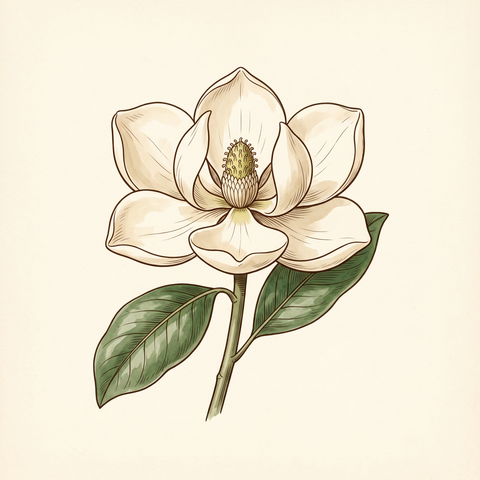
Solitary
One flower per peduncle, no branching, no clustering. The baseline, and rarer than it looks — most "single" blooms turn out to be hundreds of flowers wearing a costume.
Published · Read the entry →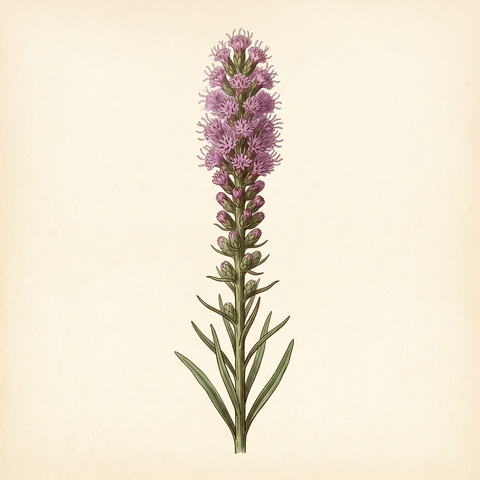
Spike
An unbranched axis with sessile flowers, no individual stalks. The difference from a raceme comes down to the pedicel.
Published · Read the entry →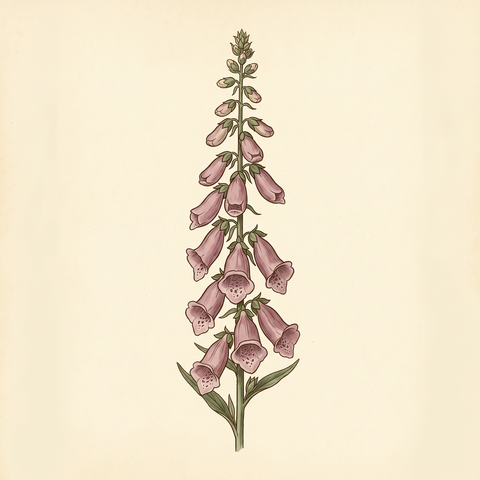
Raceme
An unbranched axis with pedicellate flowers, indeterminate, oldest at the base. The first introduction of the determinate-vs-indeterminate distinction that runs through the arc.
Summer 2026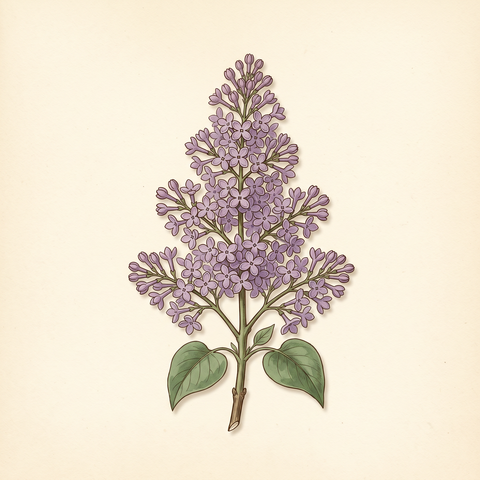
Panicle
A branched raceme: racemes of racemes. Complexity through branching. Almost every fluffy summer cluster that looked like one thing and is actually a thousand.
Summer 2026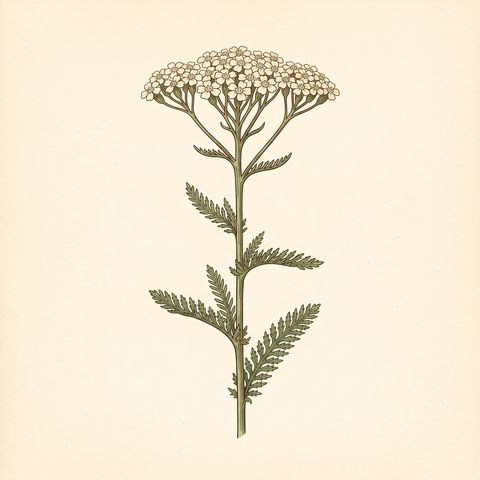
Corymb
Flat-topped cluster: outer pedicels longer than inner, so all flowers reach the same plane. Why this shape — a landing platform for pollinators.
Summer 2026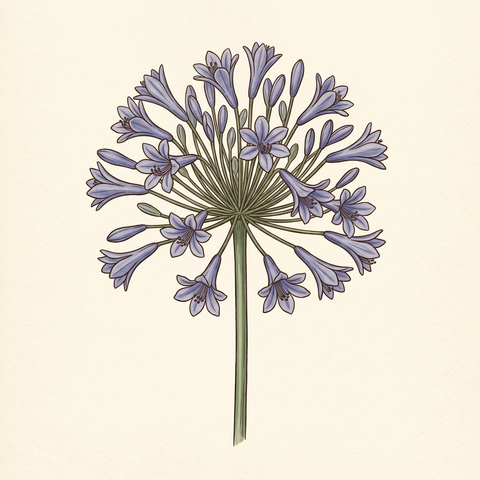
Umbel
All pedicels arise from a single common point, flat or rounded top. Includes the California-native buckwheats (Eriogonum).
Late summer 2026Autumn 2026
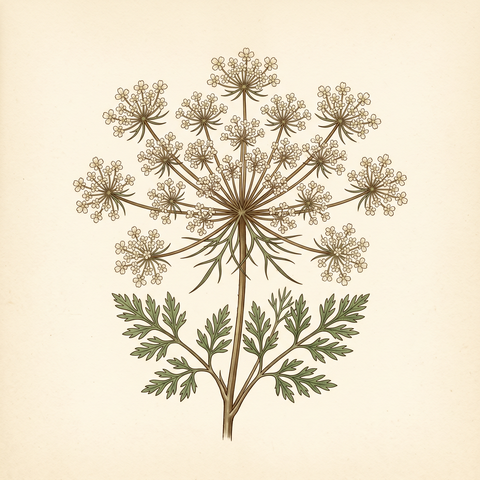
Compound umbel
An umbel of umbels: the carrot family's signature. Also the most lethally poisonous plants in North America (poison hemlock, water hemlock). Family-ID earns a careful entry.
Autumn 2026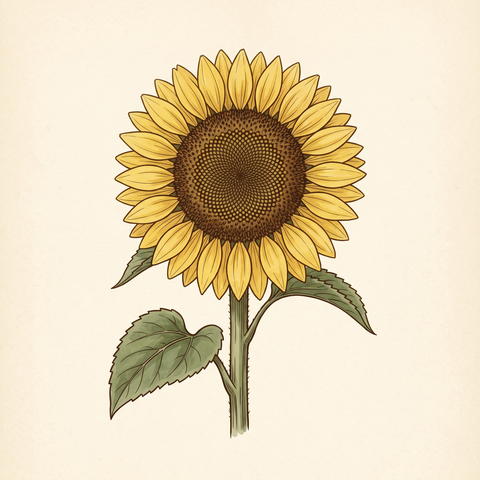
Capitulum
The big reveal: a sunflower isn't a flower. It's a hundred-plus tiny flowers on a flattened receptacle, rays around the edge and disks in the middle.
Autumn 2026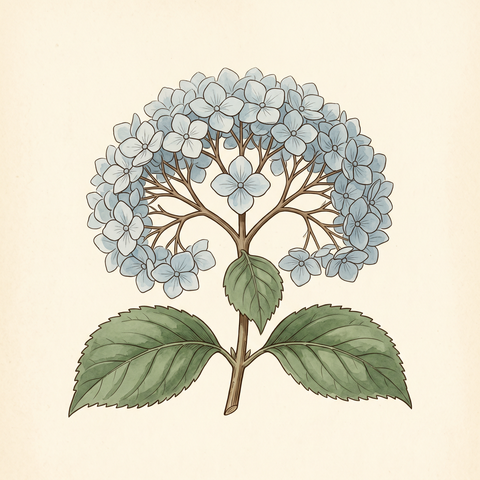
Cyme
A determinate inflorescence: the central flower opens first, then laterals follow. Determinate growth caps a plant's flower count and changes how you prune it.
Autumn 2026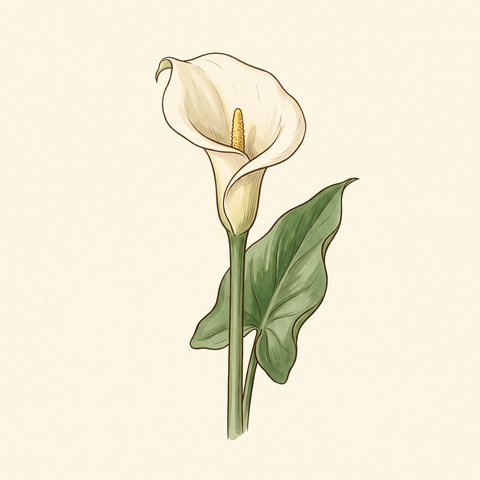
Spadix
A fleshy spike of sessile flowers subtended by a spathe. "Is my Monstera blooming?" answered here — with beetle pollination and thermogenesis (the spadix can warm 10–15°C above ambient).
Autumn 2026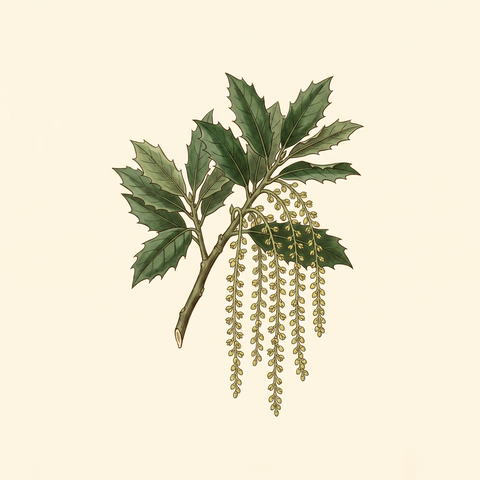
Catkin
Pendulous spike of unisexual, wind-pollinated flowers. Reduced petals, exserted stamens, lightweight pollen in extravagant quantities — and Bay Area allergy season.
Late autumn 2026Late autumn 2026 · The Closer
Cyathium — what counts as one flower
Euphorbia's cyathium is the year's tightest morphological trick. A cup-shaped involucre, looking like a single small flower, contains a central female flower reduced to one pistil and several male flowers reduced to single stamens, plus a nectar gland on the rim. The whole structure is an inflorescence pretending to be a flower.
A poinsettia's red "petals" are bracts. The actual flowers are the green-yellow cyathia clustered in the center, each one a miniature inflorescence pretending to be a single flower.
By the end of 2026 you should be able to read what a flower actually is — counting florets in a sunflower head, tracing determinate-versus-indeterminate logic, naming the spathe-and-spadix of an aroid. The cyathium ties it together: what looks like one flower is often many, and what looks like many is sometimes one.
How to use this hub
If you're new to the pillar, start at № 01, Solitary. It and Spike (№ 02) are both live now, and Raceme is up next. Trying to name an inflorescence you're holding? Scan the cards until you see one that fits. Teachers: every form is a self-contained mini-lesson with the science cited and the pollination story attached. Welcome in.
Sources
Endress, P. K. (1994). Diversity and evolutionary biology of tropical flowers. Cambridge University Press.
Weberling, F. (1989). Morphology of flowers and inflorescences. Cambridge University Press.
Simpson, M. G. (2010). Plant systematics (2nd ed.). Academic Press.
Mauseth, J. D. (2017). Botany: An introduction to plant biology (6th ed.). Jones & Bartlett Learning.