California Natives · No. 06
Hummingbird Sage: The Native That Wants the Dry Shade Under Your Oak
A field guide to Salvia spathacea, the rhizome-spreading, fruit-scented sage that thrives in the dry shade where most California natives give up, and brings hummingbirds to eye level every spring.
About the Plant
Many California gardeners eventually face a similar situation: the dry shade under a native oak, along a north fence, or beneath a big shrub, where the soil is shaded all summer and watering is either unwise or difficult to achieve with impacting plants and trees next to it (overwatering can create conditions that favor pathogens that can damage flora). Most plants either need more light or more water than that spot can offer. Hummingbird sage is the one that fits into that hard-to-fill spot.
Hummingbird sage (Salvia spathacea, pronounced SAL-vee-uh spa-THAY-see-uh) is a low, spreading, semi-evergreen perennial in the Lamiaceae, the mint family, and one of the California sages, the group of aromatic Salvia species centered on the state that botanists place in a group called Audibertia (Walker & Sytsma, 2007). It also goes by the names pitcher sage and crimson sage. If you are already familiar with a California sage, you probably know white sage or Cleveland sage: silvery, sun-baked chaparral plants that want full sun, fast drainage, and no summer water at all. Hummingbird sage is their shade-dwelling cousin, and almost everything you learned from them isn't applicable here. That difference is the whole story of the plant, so we'll come back to it.
What it shares with the other sages is the square stem of the mint family, the fragrant foliage, and a flower built around a clever pollination mechanism. What sets it apart is where it grows and how it gets around: in the shade, and by spreading.
What You're Looking At
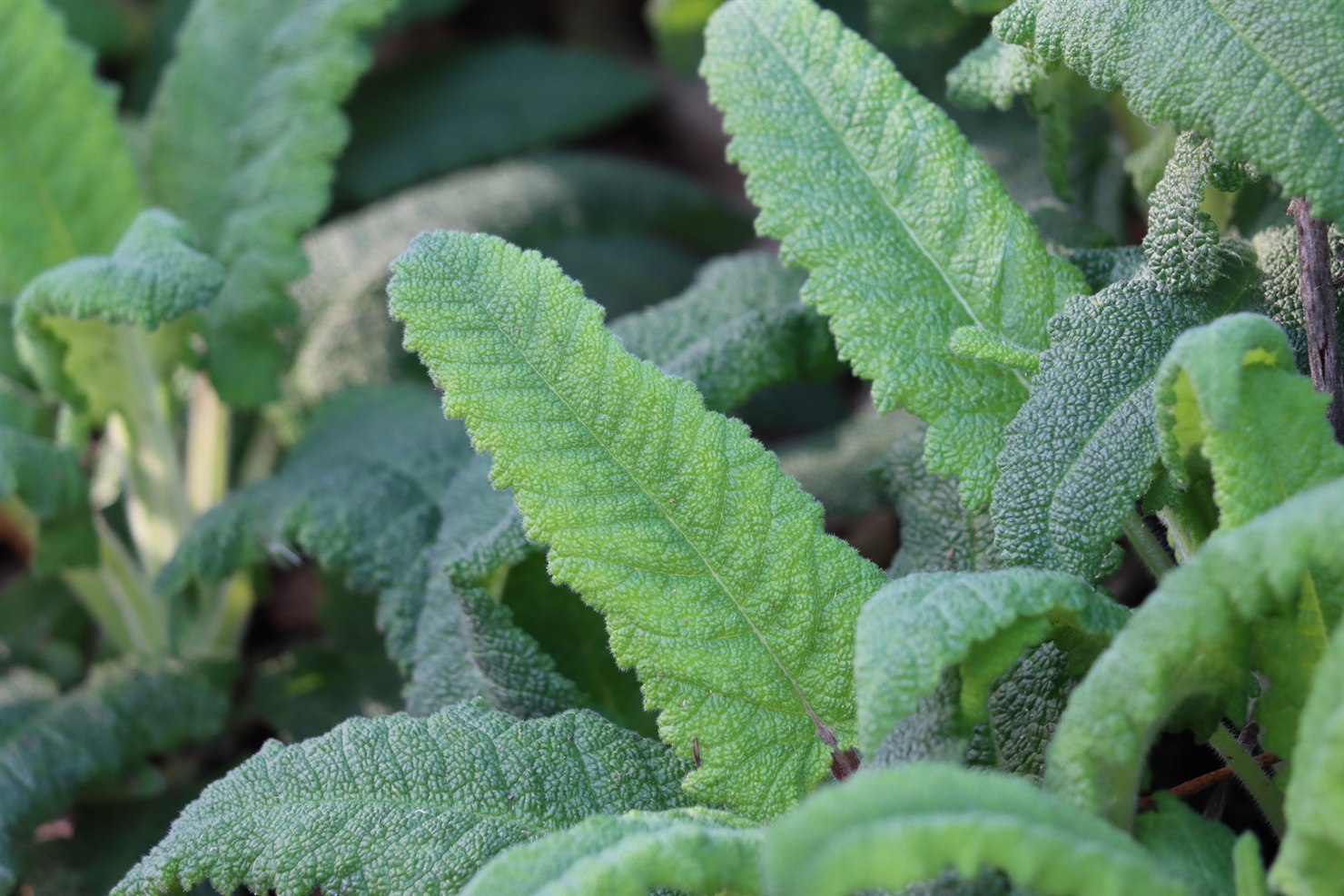
Start by looking at ground-level. Hummingbird sage forms a low rosette of large leaves, each one long and arrowhead-shaped at the base, deeply wrinkled across the surface. Leaves are soft with fine hairs, and aromatic when you brush them, with a scent closer to fresh fruit than to culinary sage. The leaves can reach a foot long and they stay green through most mild winters, which is part of what makes the plant useful as a groundcover.
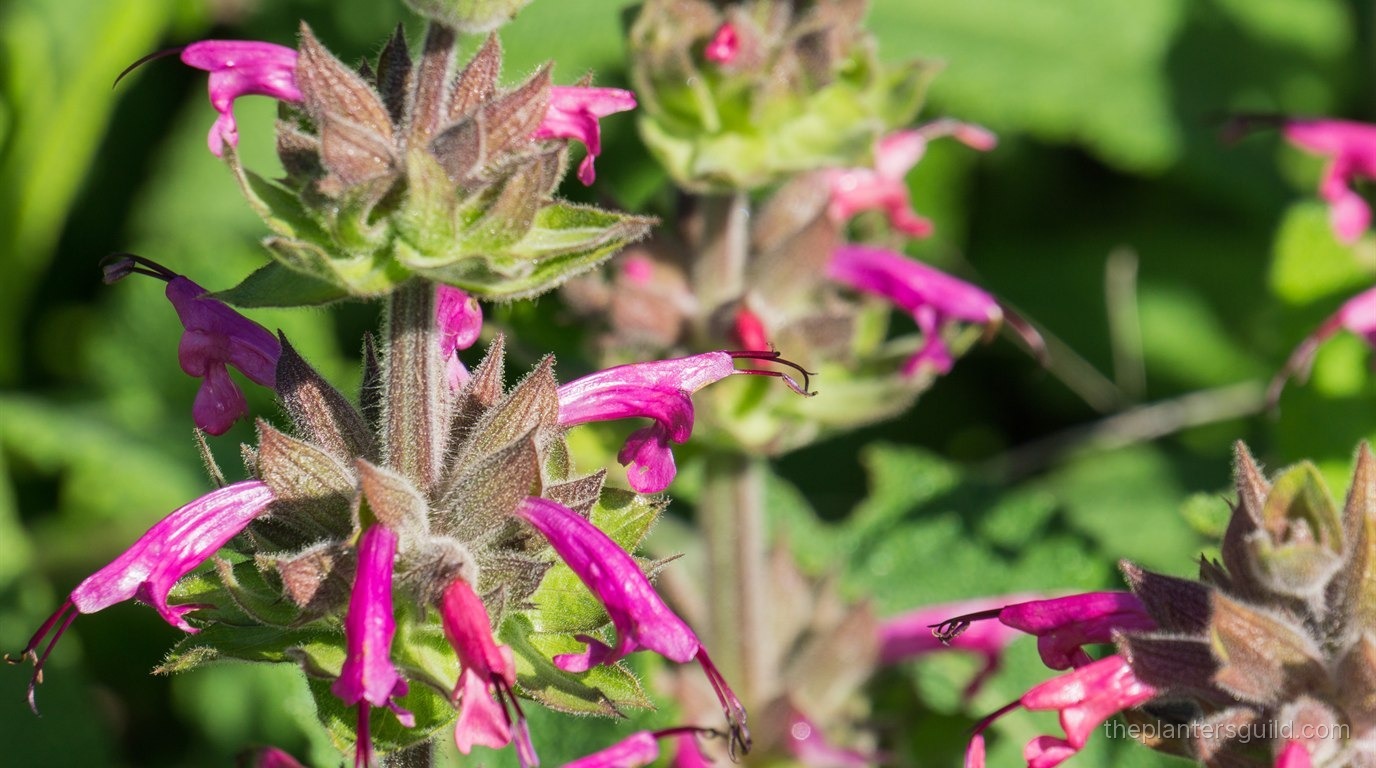
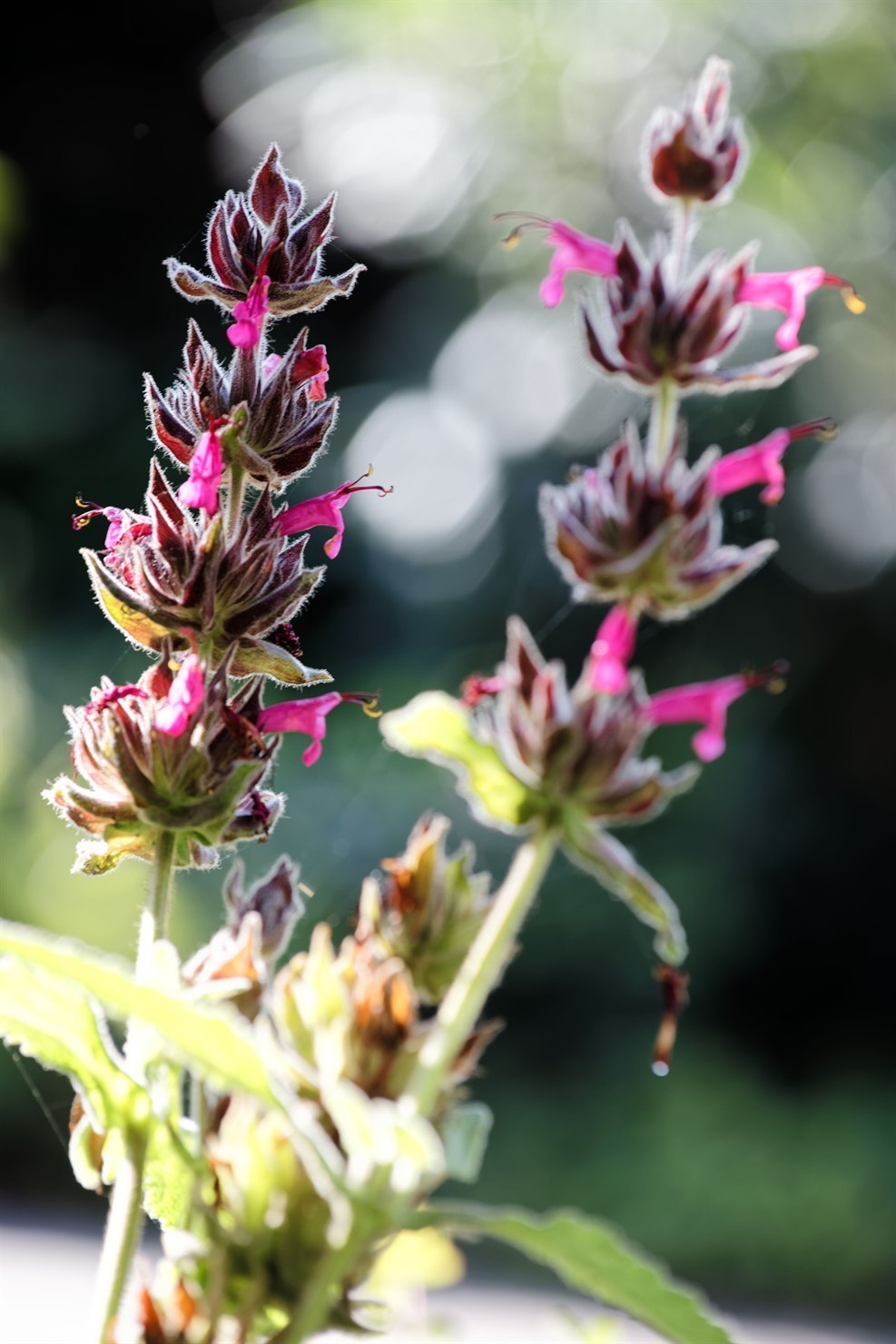
In spring the plant sends up flower stalks well above the height of the leaves, square in cross-section like all mints, carrying the flowers in dense whorls spaced out along the stem rather than in one solid spike. Each whorl sits in a cluster of woolly, purple-brown bracts (modified leaves at the base of the flowers), and out of them come the flowers themselves: tubular, rose-magenta to crimson, and an inch or more long, with a long arching upper lip. The spaced-whorl arrangement, with a bare stem between the flower clusters, is one of the easiest ways to recognize the plant from across a garden.
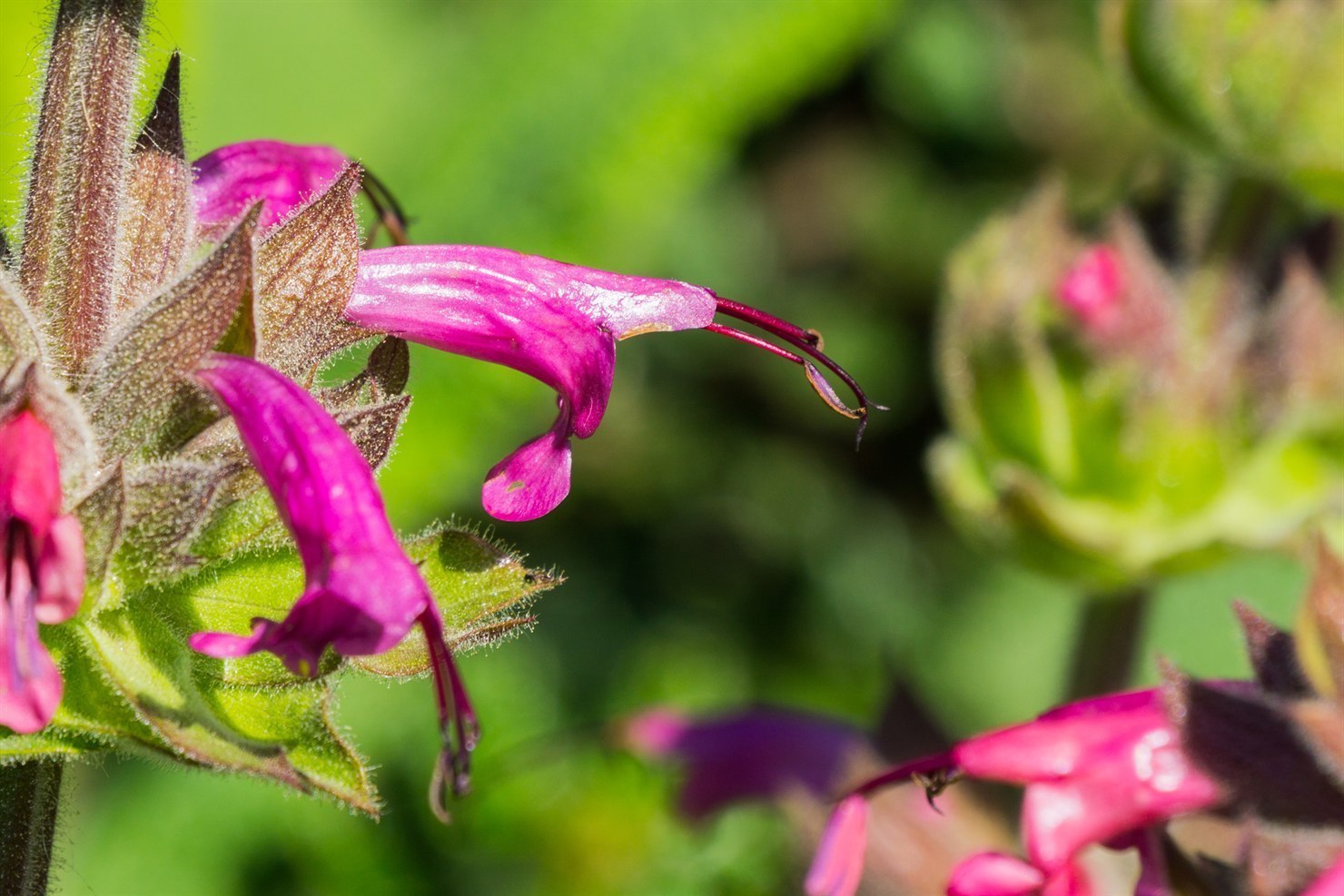
That flower shape is not an accident, and it's worth understanding because it explains the plant's name and a good deal of its behavior. More on that in the pollinator note below.
Where It Comes From
Hummingbird sage is mostly endemic to California, growing through the Coast Ranges from the Napa and Sacramento Valley area south to San Diego County and just over the Mexican border. It grows almost always below about 2,000 feet of elevation (Jepson Flora Project, n.d.). Its home ground is the shaded and partly shaded understory of the oak woodland, the edges of chaparral, coastal sage scrub, and riparian corridors. These are, notably, the kinds of places that are dim and leaf-littered through the summer rather than open and baked by the sun.
This is the key to the plant, and it's where it parts ways with its famous relatives. White sage, black sage, and Cleveland sage are creatures of the open chaparral. These plants originally developed around full sun and sharp drainage that shut down in the dry summer and want absolutely no irrigation. Hummingbird sage evolved one layer down, in the shade those shrubs cast and under the oaks, where the soil holds a little more moisture and leaf litter, the light is filtered, and the summer is cooler. It's the understory member of the family who prefers to spend the hot days under the covered porch, and that one fact changes how you site it and water it.
It spreads, too, the way understory plants often do. Rather than building a single deepening clump, hummingbird sage travels by rhizomes, underground stems that creep outward and send up new rosettes as they go (Bornstein et al., 2005). In the wild this lets a single plant knit together a patch of shaded ground over a few seasons. In a garden it does exactly the same thing, which is either the best thing about the plant or the thing to plan around, depending on what you wanted.
Where People Go Wrong
The classic mistake with hummingbird sage is treating it like the California sage you may already be familiar with. Someone reads "California native sage," and likely pictures white sage on a sunbaked hillside. They then plant hummingbird sage in the hottest, brightest, and driest spot in the yard with no irrigation. All this, because that's our expectation of what natives want. By midsummer the leaves are scorched and crisping at the edges, the plant looks miserable, and the outcome is that the plant is likely not as strong as it would be if grown in the right conditions. It wasn't. It was put in the one situation it specifically didn't evolve for.
Provide the plant with the conditions that it prefers and it's so much easier. This is a shade plant. Give it part to full shade, the dappled light under a tree or the cool side of a structure, and it relaxes. Give it a little organic matter in the soil and a little more water than you'd extend to a chaparral sage, and it thrives. The plant is not difficult. It's just labeled with a word, "sage," that often carries the wrong instructions for this particular species. Read the habitat instead of the common name and the care falls into place.
So before you plant, look at where you want to plant it. Is it shaded for most of the summer day? Does the ground there hold at least a little moisture and litter, rather than baking to dust? Those are the conditions it's asking for, and they happen to be the conditions of the spot most gardeners struggle to fill.
Sun
Shade to part shade is the target, which makes this plant unusual and useful. It is genuinely tolerant of deep shade, including the dry shade under oaks, and it will grow and spread there where few flowering plants will. The trade-off in heavy shade is fewer flowers. For the densest bloom, give it bright filtered light or a few hours of gentle morning sun: roughly four to six hours of softened light produces the heaviest flowering without stressing the leaves.
Near the coast, where the sun is weaker and the air is cool, it tolerates considerably more direct light. Inland, in a hot valley garden, the more shade the better, and full afternoon sun is the one exposure that reliably burns it. The rule of thumb is the inverse of most California natives: when in doubt, give this one less sun, not more.
Water
Hummingbird sage is low-water once established, but is a bit more forgiving than the chaparral sages, because of its shaded home. In the wild it gets the cooler soil and lingering moisture of the understory, so it accepts occasional summer water in a garden, especially in shade, without the rot risk that summer irrigation brings to a white sage or a ceanothus.
Through the first year, water a new plant regularly enough to keep it from wilting while the rhizomes establish, easing off as it settles in. After that, an established patch in shade gets by on very little watering, and an occasional deep summer soak keeps the foliage fresh and can prompt a second flush of bloom. The one real caution is the oak. If you're using hummingbird sage as an understory groundcover beneath a native oak, which is one of its best uses, keep summer water light and away from the trunk: California oaks are vulnerable to root and crown rot when their soil is kept wet in summer, and the sage tolerates the oak's dry-summer regime well enough that you don't need to fight it.
Soil
This is where hummingbird sage is refreshingly easy. It's adaptable, and it tolerates clay better than most California sages, a direct consequence of being a woodland plant rather than a sharp-drainage chaparral one. It actively appreciates the kind of soil it grew up in: ground with some organic matter, topped with leaf litter, the duff layer of a woodland floor.
You don't need to build it a special bed. If anything, the way to please it is to skip the heavy amendment and instead let leaf litter accumulate around it the way it would under an oak, which feeds the soil slowly and keeps the rhizome zone cool and moist. Sharp drainage, the thing you'd obsess over for a chaparral native, simply isn't the deciding factor here. Reasonable drainage is plenty.
Hardiness
Hummingbird sage is reliable in USDA (United States Department of Agriculture) hardiness zones 8 through 10, taking temperatures down to roughly 15 to 20 °F. Across cismontane California (the part of the state on the ocean side of the major mountain ranges, where the climate is mildest and where this plant is native), winter cold is almost never what limits it. S. spathacea dies back in a hard freeze and returns from the rhizomes. As with most of its range-mates, the things that decide whether it thrives are light and siting, not the thermometer.
One Honest Caveat: It Will Travel
Here's the trait to settle with before you plant, not after: hummingbird sage spreads. The rhizomes that make it such a good groundcover also mean it does not stay where you put it. A single plant becomes a patch, and the patch keeps reaching outward into whatever shaded ground is adjacent, a foot or two a season in good conditions.
Whether that's a feature or a problem depends entirely on what you're looking for. If you're seeking a groundcover to knit together a difficult shaded area, this is the plant doing its job, and doing it beautifully. If you pictured a tidy specimen clump that holds one spot in a mixed border, you and the plant have different plans, and the Plant. Will. Win. So ask yourself one question first: do you want a plant, or do you want a patch? Situate it where spreading is welcome, give it an edge it can't easily cross if you need to contain it, and pull the wandering rosettes that overstep. It's not aggressive in the way an invasive is. It's just a colonizer, just being honest about it.
Sourcing and Planting Window
Plant in fall through early winter. Getting hummingbird sage in the ground before the rains lets the rhizomes and roots establish through the wet season, so the plant faces its first dry summer already settled. It's one of the more forgiving natives to establish, but fall planting still gives the best results.
Look for it at local California Native Plant Society (CNPS) chapter sales and at California-native specialty nurseries, where you'll also find named selections worth knowing. 'Powerline Pink' is a vigorous, particularly hot-pink form; 'Las Pilitas' and others offer variations in flower color and habit. The 'straight' species is widely available and is what you want for a naturalistic planting. Buy from a source that grows California natives, and tell them where you're planting it: a good native nursery should confirm that it's headed for shade and will know which selection suits your spot.
Pollinator and Wildlife Note
Now let's unpack the name. Hummingbird sage is built in considerable detail, for hummingbirds. The flowers are the right magenta-to-red that birds see well and most insects don't prioritize; the corolla is a long tube that holds nectar deep where only a long bill or tongue can reach it; and the whole flower is arranged so a hovering bird, feeding without a landing platform, brushes the pollen-bearing parts with its forehead. Sages move pollen with a lever mechanism inside the flower, and in the bird-pollinated California sages that lever has been reshaped over evolutionary time to dab pollen onto a hummingbird rather than a bee (Walker & Sytsma, 2007). The plant and the bird are a matched pair.
In a California garden the main visitor is Anna's hummingbird, a year-round resident that times much of its breeding to the late-winter and spring bloom of native plants like this one, with migrant Allen's and rufous hummingbirds working the flowers in season too. Bees and other insects visit as well, some of them robbing nectar through the base of the tube rather than entering the front, but the flower's design clearly favors the birds. The plant pays off in a way few natives manage: because it holds its flowers low, on stalks rising just above a groundcover, it brings the hummingbirds down to a height where you can watch them from a path or a window. Add the fragrant evergreen foliage and the spreading habit that fills hard ground, and you have one of the best plants going for the shaded parts of a California garden.
Quick Reference
- Sun: Part shade to full shade. Tolerates more sun near the coast or with extra water. Hot, dry, full-sun exposure is the one place it scorches. This is the shade-loving exception among California sages.
- Water: Low once established, but more forgiving of summer water than chaparral sages, especially in shade. Under a native oak, keep summer water minimal to protect the oak's roots.
- Soil: Adaptable. Tolerates clay better than most California sages and appreciates the leaf litter and organic matter of its woodland home. Good drainage helps but sharp drainage isn't required.
- Hardiness: USDA zones 8–10, hardy to roughly 15–20 °F. Cold is rarely the limiting factor across cismontane California.
- Bloom: Magenta to rose-crimson tubular flowers in spaced whorls up tall square stems, peaking March through May. Occasional rebloom with summer water.
- Size: A low basal mat of large leaves, 1–2 ft tall, with flower stalks rising to 2–3 ft. Spreads indefinitely by rhizome into a patch several feet across.
- Habit: Rhizomatous, semi-evergreen perennial groundcover. Spreads by underground runners to form colonies.
- Plant in: Fall through early winter, before the first dry summer, so the roots establish through the rainy season.
- Source from: Local California Native Plant Society chapter sales and California-native specialty nurseries. Selections like 'Powerline Pink' and 'Las Pilitas' are widely grown.
- What to avoid: Hot, exposed, full-sun sites; heavy summer irrigation right against an oak trunk; expecting a tidy clump that stays put.
The Takeaway
Hummingbird sage is the California native that breaks the rules the other sages taught you. White and Cleveland sages want blazing sun, sharp drainage, and a bone-dry summer. This one wants the opposite: the shaded, leaf-littered ground under an oak, a little more forgiveness on water, and room to wander. That makes it the rare native with a real answer for dry shade, the spot where most California gardeners have given up and planted nothing. Put it there, decide up front that you want a spreading patch rather than a neat clump, and then mostly leave it alone. In spring it sends up magenta spikes built for hummingbirds and holds them low enough that you can watch the birds work them from a window. Few plants do more with a worse spot.
Sources
Bornstein, C., Fross, D., & O'Brien, B. (2005). California native plants for the garden. Cachuma Press.
California Native Plant Society. (n.d.). Salvia spathacea (Hummingbird Sage). Calscape. Retrieved June 19, 2026, from https://www.calscape.org/Salvia-spathacea-(Hummingbird-Sage)
Jepson Flora Project (Eds.). (n.d.). Salvia spathacea. Jepson eFlora. Retrieved June 19, 2026, from https://ucjeps.berkeley.edu/eflora/eflora_display.php?name=Salvia+spathacea
Lady Bird Johnson Wildflower Center. (n.d.). Salvia spathacea (Hummingbird sage). University of Texas at Austin. Retrieved June 19, 2026, from https://www.wildflower.org/plants/result.php?id_plant=sasp3
Walker, J. B., & Sytsma, K. J. (2007). Staminal evolution in the genus Salvia (Lamiaceae): Molecular phylogenetic evidence for multiple origins of the staminal lever. Annals of Botany, 100(2), 375–391. https://doi.org/10.1093/aob/mcl176